count


Health Center Receives Nearly $8 Million Federal Grant for Improvements to Research Core Facility
FARMINGTON, CONN. – The University of Connecticut Health Center has received a $7.9 million federal grant to renovate, modernize, and improve a research core facility that supports the projects of 136 scientists.
The grant from the National Center for Research Resources, part of the National Institutes of Health, will support a 15,480 square foot renovation in one of the original research buildings on the Farmington campus. The funding was awarded under the American Recovery and Reinvestment Act (ARRA) of 2009.
"This grant will move the UConn Health Center forward to achieve national and international prominence by sustaining and expanding our core facilities in support of our interdisciplinary and clinical and translational research initiatives," says Dr. Marc Lalande, principal investigator of the grant award and senior associate dean, research planning and coordination. "UConn is among a select group of academic medical centers to be awarded Recovery Act funds through the NIH’s facilities improvement grant program, which underscores the importance of and the need for the project."
The plan will significantly improve the overall operational efficiencies of the facility and correct problematic working conditions and ergonomic issues for the staff. It will also use sustainable "green" technologies to reduce water and energy consumption, thereby producing cost efficiencies over the long term.
The project is estimated to take a little more than two years and will immediately create new jobs. An estimated, 115 to130 construction and trades workers will be employed during the proposed renovations. In addition, throughout the design and construction period, 15 to 20 full and part-time architects, engineers, technical support staff and specialty consultants will work on the project. The NIH grant will fund 85 percent of the renovations; the remaining 15 percent, or approximately $1.3 million, will be financed by the Health Center.
"This stimulus grant is a win-win for Connecticut," says 5th District Congressman Christopher Murphy. "Not only will it make needed improvements to the UConn Health Center, it will also create jobs, from the engineers designing the upgrades to the men and women who will transform this facility."
Expanded funding for NIH research included in the stimulus legislation already has resulted in awards of more than $19 million for investigators at the Health Center. The grant announced today brings the total stimulus funding from NIH to approximately $27 million over several years.
A number of research programs will benefit from the improvement of the core facilities, including a group project researching the development of protective immunity against viral and bacterial pathogens and their products, which received more than $3.5 million in ARRA funds.
The University of Connecticut Health Center includes the schools of medicine and dental medicine, the UConn Medical Group, University Dentists, and John Dempsey Hospital. Founded in 1961, the Health Center pursues a mission of providing outstanding health care education in an environment of exemplary patient care, research and public service. More information about the UConn Health Center is available at www.uchc.edu.
Note: News professionals are invited to visit the Office of Communications home page at today.uchc.edu for archived news releases and other information.
FARMINGTON, CONN. – Match Day was a great success for students at the University of Connecticut School of Medicine as 97 percent secured residencies through the National Residency Match Program. The national average is 93 percent.
Primary care residency programs, mostly internal medicine and pediatrics, accounted for 35 percent of the students. Emergency medicine, obstetrics and gynecology and psychiatry were the top three programs for the remaining 65 percent of students. The majority of the class, 54 of the 75 students, will stay in the Northeast, with 16 remaining in Connecticut.
“Year after year, our students match to the most prestigious residencies in the country, and this year is no exception. We’re extremely proud of them,” says Dr. Anthony Ardolino, associate dean of medical student affairs.
Match Day is conducted annually at medical schools across the country to match students with residency programs and fill the available training positions at teaching hospitals around the country.
Photo: http://today.uchc.edu/images/news/matchday2010_1.jpg
Caption: Christopher Sala (left), of Stamford, a fourth-year student at the UConn School of Medicine, and Tobias Wasser, of New Milford, open their envelopes to find out which residency programs they’ll be attending. Sala will stay at the UConn Health Center in the emergency medicine program and Wasser will attend the psychiatry program at Yale University. Both are members of the Class of 2010 who received their residency appointments at the traditional Match Day ceremony March 18.
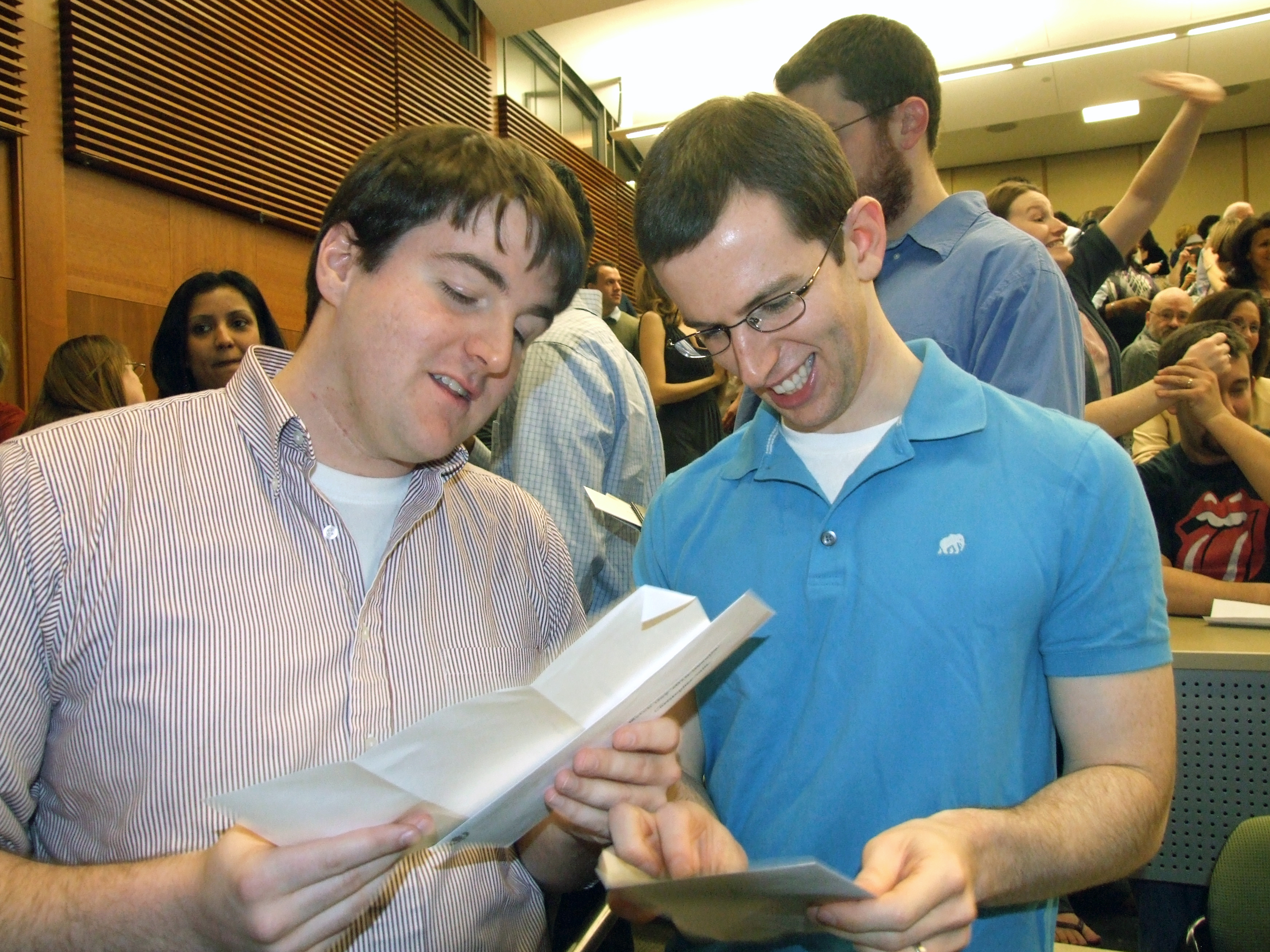
Photo: http://today.uchc.edu/images/news/matchday2010_3.jpg
Caption: Charlecinth Yennie (center), a fourth-year student at UConn School of Medicine, along with family members, is happy to learn she has been accepted into the family medicine residency program at the UConn Health Center and St. Francis Hospital and Medical Center. Yennie, of Hartford, is one of 75 members of the Class of 2010 who received their residency appointments at the traditional Match Day ceremony March 18.

The University of Connecticut Health Center includes the schools of medicine and dental medicine, the UConn Medical Group, University Dentists, and John Dempsey Hospital. Founded in 1961, the Health Center pursues a mission of providing outstanding health care education in an environment of exemplary patient care, research and public service. More information about the UConn Health Center is available at www.uchc.edu.
Note: News professionals are invited to visit the Office of Communications home page at today.uchc.edu for archived news releases and other information.

The University of Connecticut is just months away from opening a new research building in Farmington to enhance Connecticut’s role as a leader in innovative high tech research and technology transfer in the areas of stem cell biology, advanced microscopy and imaging, computational biology and genetics.
Especially designed with open labs that flow into each other and office areas located on hallways running between labs, the new Cell and Genomic Sciences Building intends to promote interdisciplinary research among the academic and industry chemists, geneticists, physicists, mathematicians, cell biologists, and computer scientists housed there. This collaborative effort aims to capitalize on the power of different areas of scientific expertise to revolutionize the practice of medicine.
"Our goal is to maximize the state’s investment in stem cell research by establishing an infrastructure to support scientists in their quest of turning discoveries at the bench into therapies for diseases such as autism and cancer and to advance the field of regenerative medicine," says Dr. Marc Lalande, senior associate dean for research planning and coordination at the UConn Health Center and director of UConn’s Stem Cell Institute, as well as professor and chairman of the medical school’s genetics and developmental biology department. "This is an unprecedented opportunity for us."
Purchased by UConn with Board of Trustees’ approval in 2007, a former research and testing facility at 400 Farmington Avenue – across the street from UConn’s Health Center campus – has been undergoing a $52 million transformation and is to be equipped with the latest technologies for studying cells and their genomes. The new 117,000 square foot building is expected to open in July 2010.
The renovated building will house research laboratories, offices, a 100-seat auditorium, cafeteria, and incubator space for businesses eager to commercialize stem cell science. Designed by the Boston laboratory architecture firm Goody Clancy, the renovations will meet the requirements of a LEED Silver rating, according to project manager Kevin Norton.
The LEED (Leadership in Energy and Environmental Design) green building rating system – developed and administered by the U.S. Green Building Council – is the industry standard for measuring building sustainability.
Currently more than 100 construction workers are busy completing the mechanical and electrical systems, installing finishes, laboratory casework, interior window assemblies, and skylights over the corridors of the one-story structure.
Opportunities for Collaboration
"The overriding intent is to provide sufficient internal transparency to allow the entire research community in the building to interact, while providing natural light to internal spaces," says Norton.
Scientists in the building will be involved in a wide spectrum of research projects, including the design and construction of new laser-based microscopes, computer simulation of living processes inside cells, and sequencing of human and animal genomes, says Lalande. Being located close to UConn’s Health Center will support the goal of translating basic research findings to clinical trials, he adds.
Two corridors lead off the entrance lobby of the building to private areas dispersed around the facility for focused research.
Three major research programs will be re-located from the Health Center to the new facility: the UConn Stem Cell Institute (UCSCI), the R.D. Berlin Center for Cell Analysis and Modeling (CCAM), and the Department of Genetics and Developmental Biology. Together these three programs include about 180 scientists and their staff.
- The UCSCI was established after the state, in 2005, enacted legislation to fund stem cell research through the Connecticut State Stem Cell Advisory Committee. Over the first three rounds of competition for the state funds, UConn researchers won $20.8 million – the majority of awards granted. The funding supports more than 32 laboratories at both the Farmington and Storrs campuses. UConn scientists have submitted 44 applications for the state’s fourth grant competition round, which begins next month.
UConn has spent more than $1 million to equip the human embryonic stem cell core facility that trains researchers and lab workers from around the state on lab techniques for stem cell research; 114 have been trained to date.
Recently, staff of the core facility developed induced pluripotent human stem cells, or iPS cells, which behave like embryonic stem cells and increasingly are being used by researchers to generate in vitro models of human disease.
The on-site presence of the UCSCI and the stem cell core facility will provide both hands-on expertise and resources to the wide range of investigators in the new building.
- CCAM’s multidisciplinary team uses cutting-edge imaging, microscopy, and computational modeling to more accurately analyze living cells. CCAM has also developed a computer software and database system – the Virtual Cell – that allows researchers to construct computational models of cells, perform simulations, and analyze the results of those simulations to better understand cell physiology. More than 2,000 scientists from around the world have used the Virtual Cell to carry out simulations.
To handle these simulations (some are quite large), the new Center will house CCAM’s High Performance Computing Facility, which also provides computer support to the CCAM microscopy facility and other research projects of individual UConn faculty members.
- Equipped with $1.1 million of state-of-the-art technology to read entire genomes, the translational genomics core facility will have all the equipment necessary for DNA analysis and sequencing, gene expression analysis, genotyping, and the associated bioinformatics infrastructure to facilitate data analysis.
The new building will afford the 17 scientists from the Department of Genetics and Developmental Biology moving there the opportunity to work with their colleagues in ways that haven’t been possible before, and to use these new tools to isolate and study rare cells.
Having these programs in the same building along with researchers applying a broad range of cutting-edge approaches will significantly speed up cell research at UConn, Lalande says.
The potential of the new facility and continued stem cell funding by the state has already helped recruit two new faculty with expertise in stem cell biology and nanomedicine who are expected to join the new building’s research community later this summer, he adds.
"We’re thinking about the intersection of cell biology, genetics, and computer science, and other disciplines that inform those areas," he says.
Researchers will also find it easier to communicate with each other about their work, Lalande says, fostering collaborations that could lead to new insights into cell biology: "This building is designed to drive cross-pollination of scientific ideas to a new level."
From Lab to Marketplace
The new building will also expand the work of UConn’s Office of Technology Commercialization, including the Technology Incubation Program – UConn’s business incubator – by providing offices, conference rooms, and laboratories for six start-up biotechnology companies.
"While our scientists may generate the next stem cell breakthrough, to bring them to market there must be a group of people with the skills not only to start a company, but to help it grow," says Rita Zangari, interim director of the Office of Technology Commercialization and executive director of the Technology Incubation Program.
The new building has already helped to attract two bioscience companies, Zangari says. One company seeks to use stem cells in bone cement products, while the other – relocating to Connecticut from Massachusetts – is conducting research using stem cells extracted from tooth pulp for therapeutic use in combating degenerative diseases.
"Having the resources in place for our researchers and their industry partners to move discoveries from the lab to the marketplace fosters a climate in which ideas are easily exchanged and partnerships are developed," Zangari says. "Collaboration is the essence of UConn’s power to generate new discoveries and then build companies and jobs around them."
National Poison Prevention Week Is March 14 through 20
FARMINGTON, CONN. – Everyone, especially parents, should keep track of anything that can be poisonous and keep it out of children’s reach. The reminder comes as part of National Poison Prevention Week, March 14 through 20.
"If you could do one thing to poison proof your home, lock up all medications, including prescriptions, over-the-counter, and herbal and natural supplements," says Amy Hanoian-Fontana, community education specialist at the Connecticut Poison Control Center. "National Poison Prevention Week is a great reminder to take stock of the poisons you have in your home and do something about them to keep your family safe."
Poison control centers are the local authority on substances or medications that are potentially hazardous when exposed to, touched, ingested or inhaled, as well as stings and bites. The national toll-free number, 800-222-1222, works from anywhere in the U.S., with calls routed to the nearest poison control center. Connecticut’s is located at the University of Connecticut Health Center.
Approximately 2 million poisonings are reported each year to the 60 poison control centers across the United States. The American Association of Poison Control Centers says approximately 90 percent of poisonings happen at home, more than half of poisoning exposures involve children under the age of 6, and the majority of fatal poisonings occur among adults, especially older adults.
Experts say because many poison exposures can be treated at home, those in doubt about whether to call the Poison Control Center hotline should err on the side of caution and make the call.
The University of Connecticut Health Center includes the schools of medicine and dental medicine, the UConn Medical Group, University Dentists, and John Dempsey Hospital. Founded in 1961, the Health Center pursues a mission of providing outstanding health care education in an environment of exemplary patient care, research and public service. More information about the UConn Health Center is available at www.uchc.edu.
Note: News professionals are invited to visit the Office of Communications home page at today.uchc.edu for archived news releases and other information.
Daylight Saving Time Starts Sunday; March Is National Sleep Awareness Month
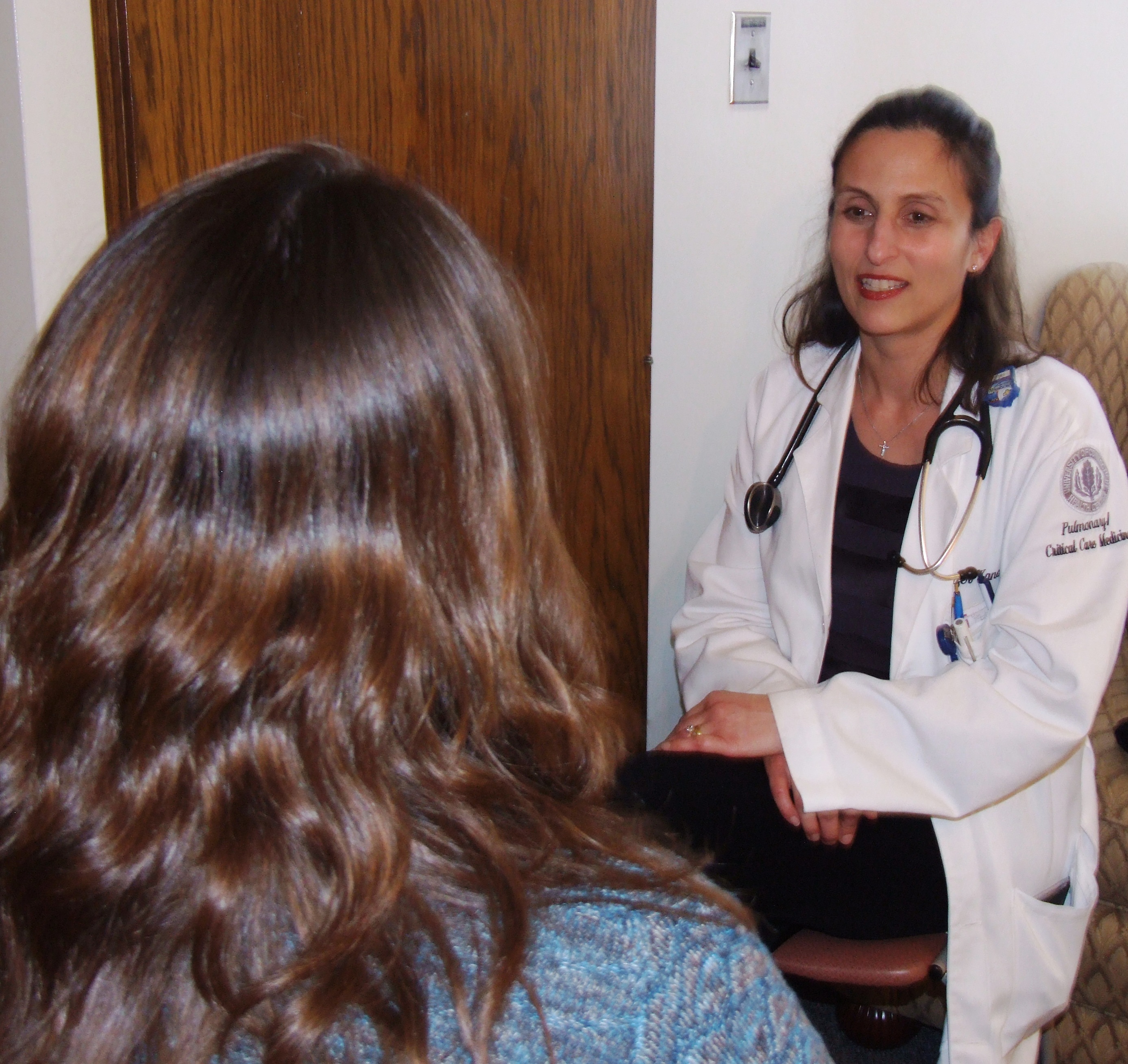
FARMINGTON, CONN. – The switch to daylight saving time is a good time to think about the importance of sleep, say experts at the University of Connecticut Health Center’s Sleep Disorders Center.
"Sleep problems can manifest themselves in a number of different ways, and not always obvious ones," says Dr. Jennifer Kanaan. "And in no place might this be more evident than in the pediatric population."
Kanaan, who specializes in sleep disorders in women, children and teens, says studies are turning up data that some may find startling:
- Research suggests sleep-deprived adolescents are more likely to be suicidal.
- It’s not uncommon for sleep deprivation to be misdiagnosed as attention deficit-hyperactive disorder, or ADHD.
- Sleep deprivation makes children more prone to accidents, the leading cause of childhood injury.
- Data show a link between childhood obesity and pediatric sleep apnea, and apnea can affect school performance.
"Forty percent of parents report their kids have sleep problems," Kanaan says. "It’s enormously prevalent, but no one talks about it. Parents who are concerned about their kids’ school performance should evaluate how their kids are sleeping."
That’s because well-rested children show up for school ready to learn, their cognitive function more receptive to the day’s lessons. And it’s one very good reason to give serious thought to starting school later in the morning, says Dr. Daniel McNally, medical director of the Sleep Disorders Center.
"As kids progress from elementary to middle to high school, their school start times become earlier," McNally says. "This is counter to their biological clocks. When they become adolescents and teenagers, they become vulnerable to sleep phase shift – simply put, their body clocks tell them to go to bed late and wake up late. Their need for sleep goes up with adolescence, not down. But, in reality, teenagers don't get the sleep they need. So really, high school should be starting the latest, not the earliest."
The Sleep Disorders Center is equipped to see patients as young as age 2. More information is available at http://health.uchc.edu/clinicalservices/sleep. To make an appointment, call 860-679-4090.
Photo: http://today.uchc.edu/images/news/jkanaan.jpg
Caption: Dr. Jennifer Kanaan, a sleep expert at the UConn Health Center, says sleep disorders often are related to other health problems and, in the case of children and teens, can lead to behavioral and school performance problems. The Health Center’s Sleep Disorders Center sees patients as young as 2 years old.
The University of Connecticut Health Center includes the schools of medicine and dental medicine, the UConn Medical Group, University Dentists, and John Dempsey Hospital. Founded in 1961, the Health Center pursues a mission of providing outstanding health care education in an environment of exemplary patient care, research and public service. More information about the UConn Health Center is available at www.uchc.edu.
Note: News professionals are invited to visit the Office of Communications home page at today.uchc.edu for archived news releases and other information.
A Forum in Early Childhood Inclusion – Enhancing Learning Through the Use of Assistive Technology
Forum to Be Held in Hartford on March 19
FARMINGTON, CONN. – Enhancing participation among young children with severe disabilities in school and community settings is the subject of a forum to be held on Friday, March 19, from 9 a.m. to noon at the Crowne Plaza Hartford - Downtown, 50 Morgan St., Hartford.
The presentation will focus on how to design inclusive learning opportunities for young children with disabilities through the use of adaptations and assistive technology. Participants will learn how to use an interview format to identify activities/routines in which to embed adaptations so that young children’s participation and learning are increased in inclusive, natural learning environments: the home, community and school.
The keynote speaker is Philippa ‘Pip” Campbell, Department of Occupational Therapy, Child and Family Research Programs at Thomas Jefferson University in Philadelphia.
The forum is sponsored by the University of Connecticut A.J. Pappanikou Center for Excellence in Developmental Disabilities and the Partnership for Inclusive Practices.
For more information or to register for the forum click on Survey Monkey or call 860-679-1500.
The University of Connecticut Health Center includes the schools of medicine and dental medicine, the UConn Medical Group, University Dentists, and John Dempsey Hospital. Founded in 1961, the Health Center pursues a mission of providing outstanding health care education in an environment of exemplary patient care, research and public service. More information about the UConn Health Center is available at www.uchc.edu.
Note: News professionals are invited to visit the Office of Communications home page at today.uchc.edu for archived news releases and other information.
Who: Robin Bellinger
What: Spread My Wings
Where: Main and Mezzanine lobbies, UConn Health Center, 263 Farmington Avenue, Farmington
When: March 15 through May 6, daily 8 a.m. to 9 p.m.
About the Artists:
Robin Bellinger states that art presents her with opportunities to express her values and beliefs in both two and three dimensions. Her current body of work represents different obstacles and triumphs she has experienced throughout her life and personifies her experiences and emotions, she says. "Through my work, I want to tap into the unlimited well of my imagination and express it," says Bellinger. "My contemporary work lends itself to differing interpretations and emotions. The purpose of my artistic journey is to search within myself and the environment around me."
Bellinger earned her Bachelor of Fine Arts degree at the Massachusetts College of Art and Design and attended ceramic workshops at Boston’s Museum of Fine Arts. Working under Boston artist Kristin Mills, Bellinger evolved into both a sculptor and a painter. She uses both clay and wood in creating abstract and figure sculptures and paints in acrylic, watercolor, and mixed media.
A resident of Halifax, Massechussetts, Bellinger has exhibited her work in the Greater Boston area.
The University of Connecticut Health Center’s collection of fine arts serves to enhance the environment and promote the sense of a caring community for patients, visitors, staff and students. Art is selected, acquired and exhibited by the UCHC Art Advisory Committee. To view a selection of the Health Center’s permanent collection visit: http://auxiliary.uchc.edu/art.
The University of Connecticut Health Center includes the schools of medicine and dental medicine, the UConn Medical Group, University Dentists, and John Dempsey Hospital. Founded in 1961, the Health Center pursues a mission of providing outstanding health care education in an environment of exemplary patient care, research and public service. More information about the UConn Health Center is available at www.uchc.edu.
Note: News professionals are invited to visit the Office of Communications home page at today.uchc.edu for archived news releases and other information.